


What Is Broadband Internet And Why Do I Need It?
By: Vincent Totino
Read Time: 6 min.
August 06, 2026
Broadband internet is a high-speed, always-on connection that transmits data far faster than dial-up. The FCC defines broadband as speeds of at least 100 Mbps download and 20 Mbps upload. It's delivered over fiber, cable, satellite, or wireless networks and supports streaming, gaming, and video calls at the same time.
Unlike older dial-up connections, broadband Internet allows for simultaneous voice and data communication, making it possible to browse the web, stream videos and do things online with unprecedented speed and efficiency.
Optimum Internet can help get you connected with faster download and upload speeds. But before you commit, go ahead and learn more about broadband Internet – and you’ll be wiser about just how fast our 8 Gig Internet is compared to what the other guys offer.

Benefits of broadband Internet
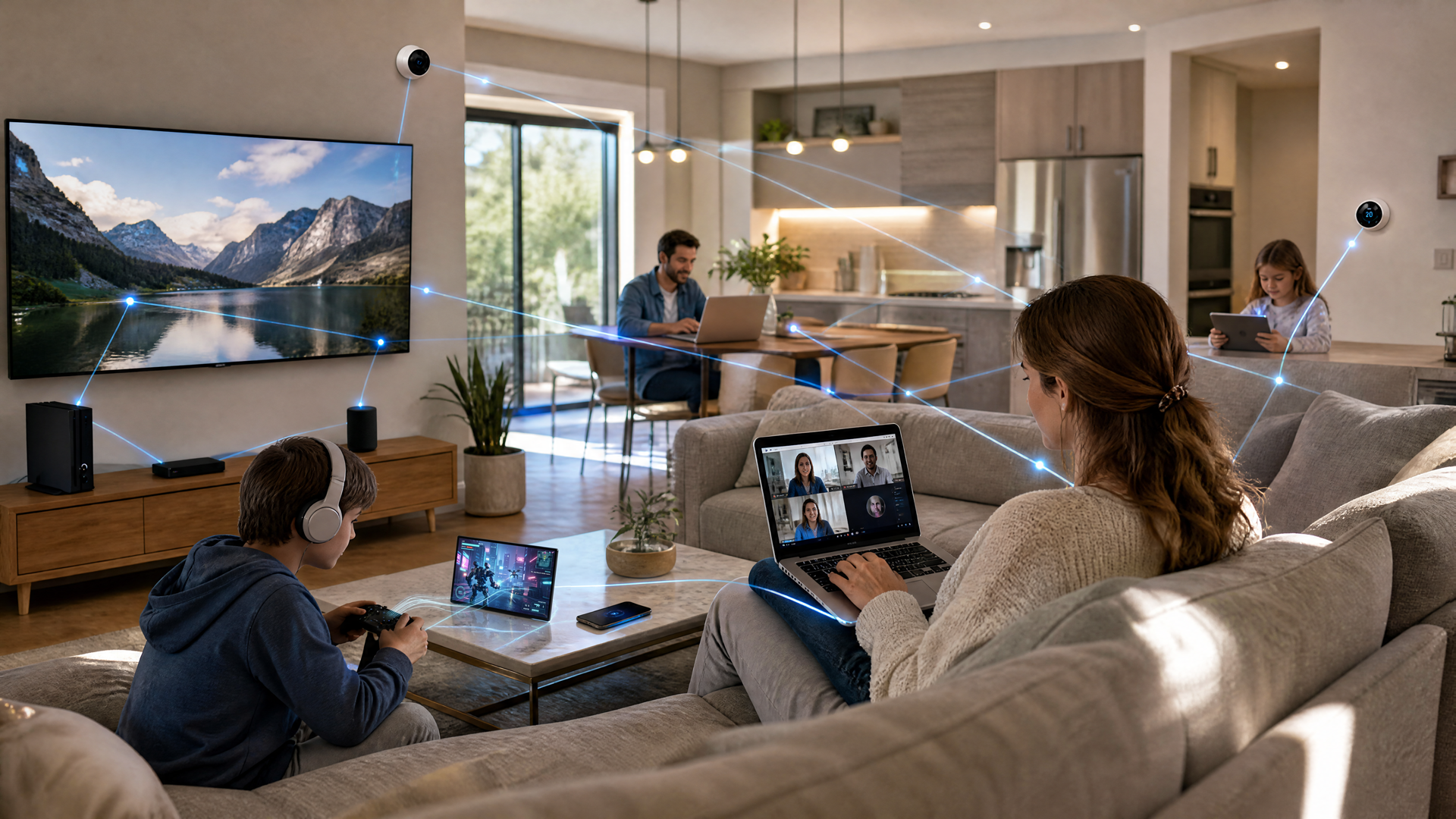
Broadband can handle high demand. Whether you’re streaming in high definition or video conferencing with a dozen coworkers, broadband can keep you connected.
- Broadband Internet is fast. Broadband Internet is fast, letting you browse, stream and game with ease.
- Broadband Internet stays on. You don’t have to constantly reconnect since broadband is always on, making it effortless and easy to keep your stuff running.
- Broadband Internet can multitask. Connect multiple devices at the same time without headaches or delays.
What types of broadband Internet connections are there?
As its name says, “broadband” uses a range of frequencies to send data over a network. This technology allows multiple signals from several devices to be transmitted at once, boosting both the speed and capacity of data transfers.
Carriers like Optimum have to follow strict FCC guidelines about the speeds offered as part of broadband Internet. Over time, technology has evolved to reach faster download and upload capacities.
- DSL: Using telephone lines to transmit digital data, DSL offers faster speeds than traditional dial-up connections – although broadband has continued to evolve past DSL into other forms that offer higher, more reliable performance. DSL download speeds tend to average somewhere around 1 to 7 Mbps..
- Cable: Cable broadband works on the same type of connection cable television, delivering high-speed Internet through coaxial cables. Cable remains widely available and reliably fast, which is why so many people keep choosing it. Cable Internet download speeds tend to range between 300 Mbps to 1 Gbps.
- Fiber-optic: Reaching faster speeds, Fiber-optic Internet uses thin strands of glass or plastic to transmit data as pulses of light. Fiber-optic Internet download speeds start at 25 to 100 Mbps, but varies by provider. Optimum offers a superfast 8 Gig Fiber Internet (8 Gbps), which is 60% faster than Frontier and 4x faster than Verizon in the New York Tri-state area.
- Satellite: Satellite broadband connects users to the Internet via satellite signals. In the off-chance that your area does not have other broadband options — which mainly happens in extremely rural areas — satellite may be worth exploring. You will need to factor in local weather patterns with this choice, as cloud cover and other conditions can interfere with the strength of satellite signal transmission.
- Wireless: This form of broadband, often associated with mobile networks, allows users to access the Internet without physical cables through technologies like WiFi or 4G/5G.
What’s the difference between Wi-Fi and broadband?
The difference between Wi-Fi and broadband relates to the type of connectivity. Broadband is often delivered via cables to a source, while WiFi syncs with broadband signals at home to deliver the wireless technology that allows you to connect devices to the Internet without a cable.
Broadband signals also can be delivered via Wi-Fi mobile networks when using smartphones. While broadband and WiFi are different, they are used together.
Fiber broadband vs. cable vs. DSL
When choosing between Fiber, cable or DSL broadband, the best option often depends on availability. While Fiber offers the fastest speeds, some areas of the country may not offer Fiber lines and this type of connectivity.
Cable broadband provides a fast option for homes that cannot access Fiber. DSL is the oldest broadband connectivity, using phone lines to connect online. However, many providers are working to phase out DSL, opting to offer customers the faster speeds of cable or Fiber.
What is broadband internet?
Broadband speeds for gaming, streaming and working from home
Gaming, streaming and working from home all require different speed needs. If the connection is too slow, gaming experiences may lag or be interrupted by the swirling buffer. Streaming movies poses similar issues.
Those who simply need a connection for an occasional video call and other work needs may be able to choose slower speed plans. Use the table below to assess the recommended speeds at home based on your needs.
| Home activity by household size | Ideal download speed | Reason |
|---|---|---|
| Browsing the Internet, posting on social media, sending emails | 25 - 50 Mbps | Basic use with no buffering |
| Single person who needs HD streaming or uses video calls | 100 Mbps | This meets the FCC speed requirements for broadband. |
| 2 -3 individuals using multiple devices | 100 - 300 Mbps | This speed easily managers multiple devices and any streaming needs without lags. |
| Family (4+), heavy amount of streaming and gaming | 300 - 500 Mbps | Higher speeds accommodate for online gaming and heavy 4K streaming. This speed reduces buffering and lag time. |
| Large family (5+) with smart home needs | 500 Mbps - 1 Gig | Reduces interruptions during the evening when lag times can be problematic (as everyone is connected) |
| Multi-game households, creatives or other “power” users | 1 Gig + | Supports higher volume streaming and creative uses that demand symmetrical upload/download speeds for maximum performance. |
Is your plan ‘broadband?"
Your Internet plan is considered “broadband” if it offers download speeds of 100 Mbps and upload speeds of 20 Mbps. However, your household’s daily streaming and gaming activities may require faster speeds.
Ready to level up broadband access in your home? Sign up for Optimum's 8 Gig Fiber Internet, which allows everyone in your household to simultaneously stream HD videos, game, host video conferences and transfer large files — no need to kick anyone off the network, ever.
Ready to Switch to Optimum? Check availability
YOU MAY ALSO LIKE

Optimum vs. AT&T: Compare Internet speed, pricing and coverage
- Read Time: 8 min.
- Internet
- October 08, 2026
How Much Internet Speed Do You Need?
- Read Time: 8 min.
- Internet
- October 08, 2026
How to Find The Best Internet Service Providers (ISPs) In Your Area
- Read Time: 6 min..
- Internet
- October 08, 2026