


How Internet Speed Plans and Speed Tests Actually Work
By: Vincent Totino
Read Time: 9 min.
June 11, 2026
We leverage the Internet for so many aspects of our lives, ranging from work to communication to entertainment. Sometimes, we need to do those activities simultaneously. High speed Internet is required to handle all of this without constant buffering, dropped connections, or frustrating slowdowns.
In this article, we’ll tell you everything you need to know about high speed Internet plans. You’ll understand how to evaluate the differences between similar speed types, how to fix slow Internet speed issues, and what factors actually impact performance at home. You’ll walk away with a better understanding of what kind of Internet speed your lifestyle requires and what Optimum can offer you.
High-speed Internet, defined
High-speed Internet plans provide download speeds somewhere between 100 Mbps to as high as 8,000 Megabit per second (Mbps). This level of speed enables seamless 4K streaming, smooth video conferencing, responsive online gaming, and reliable multi-device connectivity. As more households rely on connected devices at the same time, having sufficient speed and bandwidth is no longer a luxury. It’s a necessity.
High-speed Internet also helps reduce latency and buffering, especially when multiple people are working, streaming, or gaming at once. Let’s break down the high speed Internet options that Optimum can offer you.
Optimum Fiber speeds and plans
Fiber optic Internet is a broadband connection that can reach speeds of up to 8 gigabits per second )Gbps)*, with very little lag time. With Internet at this speed, you can enjoy dependable technology, minimal signal interference, future-ready connectivity, and consistent performance during peak usage times. Fiber Internet uses advanced infrastructure designed to handle today’s growing digital demands.
Here are the plans that we offer,
- 500 Mbps Fiber Internet: It’s a great option for everyday use, including streaming, video calls, and browsing, and it offers upload speeds that are 9 times faster than 5G Internet.
- 1 Gig Fiber Internet: This plan delivers more speed for more screens and supports heavier Internet usage, with upload speeds 17 times faster than 5G Internet.
- 5 Gig Fiber Internet: Our fiber Internet plan with upload speeds up to 90 times faster than 5G Internet, it’s designed for power users, creators, and smart homes that demand top-tier performance.
- 8 Gig Fiber Internet: Our fastest Internet ever offers upload speeds 145 times faster than 5G Internet and is ideal for households with extreme bandwidth needs.
Cable Internet speeds and plans
If you need high quality Internet at a lower cost, we also offer cable Internet plans that can fit your needs. Cable Internet is a solid choice for customers who primarily use the Internet for browsing, email, streaming, and everyday tasks.
If you’re looking for service to support essential Internet activities, you can opt for our 200 Mbps plan.
How to test Internet speed
If you’re choosing a high Internet speed plan from Optimum, it’s important to understand how to test your Internet’s speed accurately. Speed testing helps you confirm whether your service is performing as expected and can guide decisions about upgrading equipment or switching plans.
Conducting an Internet speed test
Before you begin to run an Internet speed test, it’s essential to prepare your device and network environment. Shut off other devices that may be using the Internet and connect your testing device directly to your modem or gateway with an ethernet cable whenever possible.
To get the most accurate results:
- Use one device to test your speed.
- Test that device in multiple locations around the house.
- Test the 2.4 GHz, 5 GHz, and 6 GHz bands separately if available.
- Run multiple tests to confirm consistent results.
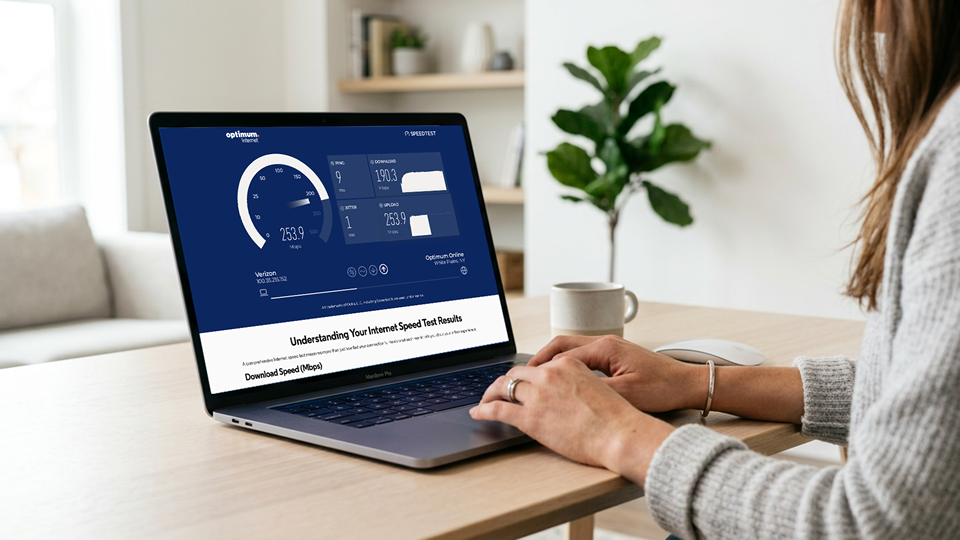
After running a speed test, you’ll receive four key measurements in addition to the overall speed:
- Download speed: The rate at which data is transferred from the Internet to your device.
- Upload speed: How fast data can be sent from your device to the Internet.
- Latency (aka Ping): The time it takes data to travel to a remote server and back.
- Jitter: The variability in latency over time, which can affect video calls and gaming.
The causes of slow Internet speeds
Slow Internet speeds can be caused by a number of different factors, many of which have nothing to do with your actual Internet plan. Understanding these common issues can help you troubleshoot problems more effectively.
Blocked or weak WiFi signals
The location of your router plays a major role in signal strength. Routers placed behind walls, furniture, or large appliances may struggle to deliver consistent coverage. For best results, keep your equipment in an open, central location and elevated off the floor whenever possible.
Old equipment
Outdated modems or routers may not be able to support newer Internet speeds. As technology advances, older hardware can become a bottleneck. Upgrading your equipment can often resolve performance issues and unlock the full potential of your Internet plan.
Viruses or malware
Viruses and malware can silently consume bandwidth in the background, slowing down your connection without obvious signs. If you suspect malicious activity, reach out to the Optimum customer support team for guidance and next steps.
ISP Issues
Network outages and scheduled maintenance happen with every ISP (Internet service provider). While these disruptions are typically temporary, they can impact performance. Keep tabs on our website or your My Optimum app for updates when service issues arise.
Upgrading your speed plan
Sometimes, the issue is simply that you don’t have enough bandwidth for your household’s Internet habits. While 300 Mbps may work well for many families, larger households with multiple 4K streams, cloud gaming, video conferencing, or heavy uploads often benefit from 500 Mbps or higher.
If you and other household members are Internet power users, fiber Internet may be the best solution. As the gold standard in residential and small business connectivity, fiber offers:
- Higher and symmetrical speeds
- Lower latency
- Greater reliability during peak usage times
- Better future-proofing as bandwidth demands increase
Switch to Optimum Internet
Don’t settle for slow Internet speeds. Unlike 5G home Internet, Optimum Fiber delivers consistent speeds and reliable performance, even during peak usage hours. You can also secure high speed Internet at a fair cost with straightforward plan options and price-lock offers that help eliminate surprise increases.
Optimum is committed to offering fast, reliable Internet backed by modern infrastructure. Use our online Internet speed test to check your current performance, and reach out to our team to explore Optimum Internet plans designed for lightning-fast connectivity and everyday reliability.
Frequently Asked Questions (FAQs)
>
What is considered "high-speed" Internet?
High-speed Internet plans provide download speeds ranging from 100 Mbps to as high as 8,000 Megabits per second (Mbps). This level of speed allows for seamless 4K streaming, smooth video conferencing, responsive online gaming, and reliable connectivity across multiple devices simultaneously.
Why is high-speed Internet necessary for modern households?
Because modern households rely on multiple connected devices at the same time, high-speed Internet is needed to prevent constant buffering, dropped connections, and frustrating slowdowns. It also helps reduce latency (lag), which is especially important when multiple people are working, streaming, or gaming at once.
What is Fiber Internet and what benefits does it offer?
Fiber optic Internet is a broadband connection that uses advanced infrastructure to deliver speeds up to 8 Gig with very little lag time. It offers higher and symmetrical speeds, lower latency, greater reliability during peak usage hours, minimal signal interference, and a future-ready connection.
What Fiber Internet plans does Optimum offer?
Optimum offers four Fiber Internet plans tailored to different needs:
- 500 Mbps Fiber: Great for everyday use like streaming, video calls, and browsing. (Upload speeds are 9x faster than 5G).
- 1 Gig Fiber: Delivers more speed for more screens and heavier Internet usage. (Upload speeds are 17x faster than 5G).
- 5 Gig Fiber: Designed for power users, creators, and smart homes demanding top-tier performance. (Upload speeds are up to 90x faster than 5G).
- 8 Gig Fiber: Optimum's fastest Internet ever, ideal for households with extreme bandwidth needs. (Upload speeds are 145x faster than 5G).
Does Optimum offer more budget-friendly options?
Yes. If you need high-quality Internet at a lower cost, Optimum offers Cable Internet plans. For essential online activities like browsing, email, and everyday streaming, you can opt for the 200 Mbps Cable plan.
How does Optimum Fiber compare to 5G home Internet?
Unlike 5G home Internet, Optimum Fiber delivers consistent speeds and reliable performance, even during peak usage hours. It also features much faster upload speeds than 5G.
How can I get the most accurate results when running an Internet speed test?
Before testing, shut off other devices using the Internet. For the best results, connect your testing device directly to your modem or gateway using an ethernet cable, use only one device to run the test, test in multiple locations around the house, test different frequency bands (2.4 GHz, 5 GHz, 6 GHz) separately if available, and run multiple tests to confirm consistent results.
What do the different measurements in a speed test mean?
An Internet speed test provides four key measurements:
- Download speed: How fast data transfers from the Internet to your device.
- Upload speed: How fast data sends from your device to the Internet.
- Latency (Ping): The time it takes for data to travel to a remote server and back.
- Jitter: The variability in latency over time, which can impact video calls and gaming.
What causes slow Internet speeds?
Slow speeds are often caused by factors unrelated to your actual Internet plan, including:
- Blocked/weak WiFi signals: Routers placed behind walls, furniture, or large appliances.
- Old equipment: Outdated modems or routers that cannot support newer, faster speeds.
- Viruses or malware: Malicious software silently consuming bandwidth in the background.
- ISP Issues: Temporary network outages or scheduled maintenance.
Where should I place my router for the best WiFi signal?
You should keep your router in an open, central location and elevated off the floor whenever possible to prevent the signal from being blocked by walls or large furniture.
How do I know if I need to upgrade my Internet plan?
If you are experiencing slowdowns, you may have outgrown your bandwidth. While a 300 Mbps plan works well for many families, larger households with multiple 4K streams, cloud gaming, video conferencing, or heavy upload needs will benefit from upgrading to a plan of 500 Mbps or higher.
YOU MAY ALSO LIKE

Optimum vs. AT&T: Compare Internet speed, pricing and coverage
- Read Time: 8 min.
- Internet
- October 08, 2026

How Much Internet Speed Do You Need?
- Read Time: 8 min.
- Internet
- October 08, 2026

How to Find The Best Internet Service Providers (ISPs) In Your Area
- Read Time: 6 min..
- Internet
- October 08, 2026