


Average Internet Speeds in 2026: Is Your Home Slower Than Average?
By: Vincent Totino
Read Time: 5 min.
July 16, 2026
InThe average internet speed in the United States ranges from approximately 170 Mbps to 307 Mbps, depending on the measurement source used.
Ookla's median is near 307 Mbps; HighSpeedInternet.com's user-test average is closer to 172 Mbps. (Both are right - they measure different things.)
The number that matters most isn't the national one - it's yours. Before reading another stat, check the internet speed test online and note your result.
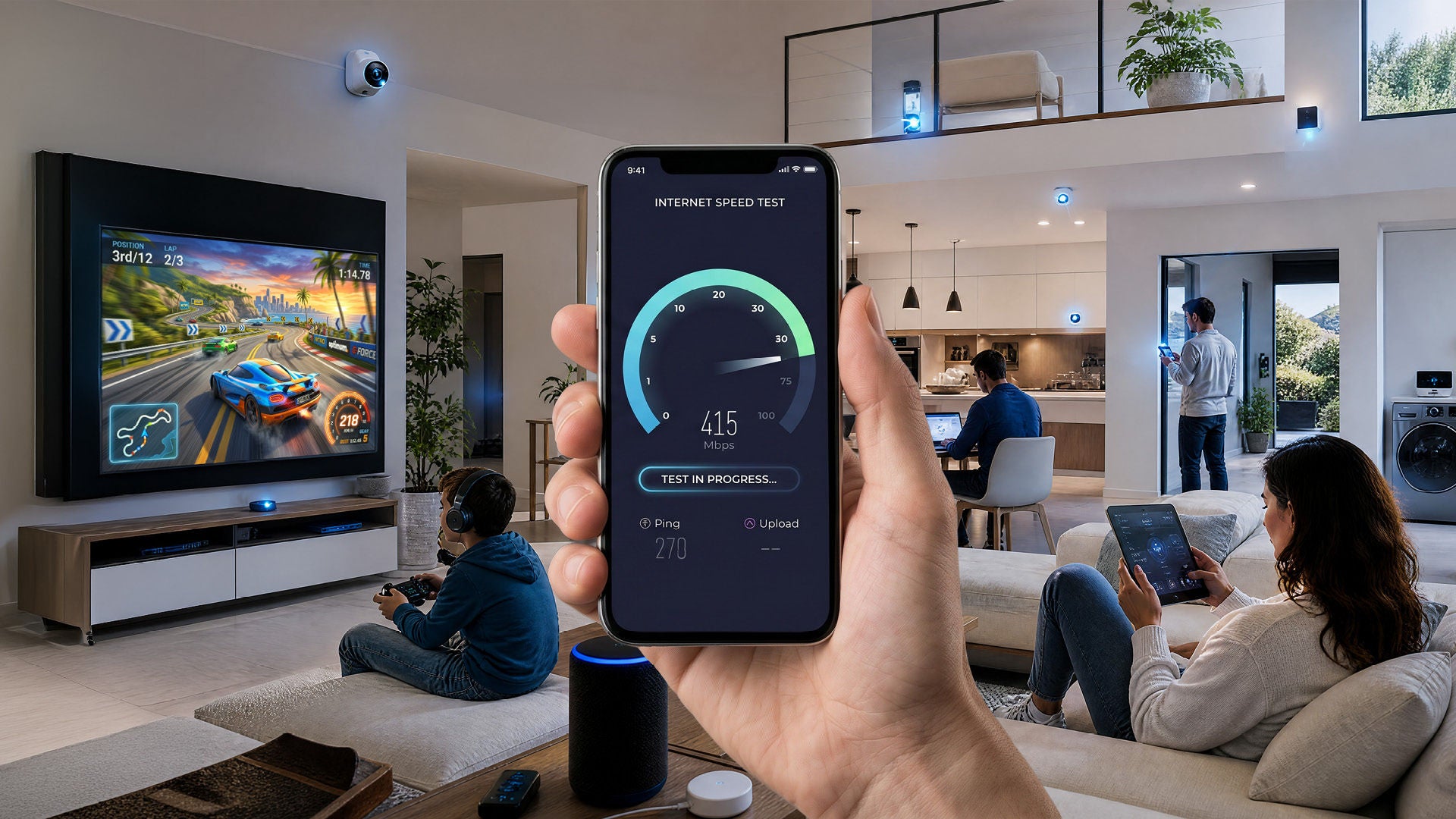
Test your speed against the average
Knowing the national average is one thing; knowing how your connection compares is more useful. Run Optimum's free speed test on a wired connection, since Wi-Fi can mask what your plan actually delivers. If your result lands well below the averages here, the next sections explain why.
What is the average home internet speed in the US?
There's no single official average. Ookla's Speedtest Global Index reports a US median near 307 Mbps download and 56 Mbps upload in 2026; HighSpeedInternet.com's user tests land closer to 172 Mbps.
Two trends hold across sources: US speeds have climbed sharply (about 31 Mbps in 2013 to triple digits today), and upload still trails download on most connections. The FCC's broadband benchmark, set at 100/20 Mbps in 2024, is now met by most households.
Average internet speed by state
Where you live shapes what you can get - fiber availability, competition and density drive most of the gap between fastest and slowest states. According to HighSpeedInternet.com's 2026 report, the fastest are West Virginia (216.96 Mbps), Florida (216.14) and Maryland (213.63), while the slowest are Hawaii (90.9), Alaska (102.09) and Montana (122.62).
Every state Optimum serves ranks above the 172 Mbps national average - two sit near the top.
| State | Average Download Speed | National Rank |
|---|---|---|
| West Virginia | 216.96 Mbps | #1 |
| Connecticut | 201.5 Mbps | #8 |
| New Jersey | 183.52 Mbps | #15 |
| New York | 182.83 Mbps | #16 |
| Louisiana | 177.96 Mbps | #20 |
| Texas | 177.81 Mbps | #21 |
| U.S. National Average | 172 Mbps |
Source: HighSpeedInternet.com, 2026 state speed rankings.
Average internet speed by connection type
The technology behind your connection sets its ceiling. Here's how the main types compare.
| Connection Type | Typical Download | Upload | Best For |
|---|---|---|---|
| Fiber | 300 Mbps to 8 Gig | Symmetrical (matches download) | Heavy use, gaming, remote work, multi-gig homes |
| Cable | Up to about 1 Gig | Lower than download | Widely available everyday use |
| DSL | Often under 100 Mbps | Low | Older copper lines, being phased out |
| 5G home | About 100 to 300 Mbps | Varies | Areas with limited wired options |
| Satellite | About 50 to 250 Mbps | Low | Rural and remote locations |
Fiber's edge is symmetry: upload matches download. That helps with large files, video calls, cloud backups and live streaming, and it keeps latency low for gaming and calls. For more, see what is a good download and upload speed.
How to get faster internet speeds
Before paying for more speed, try the easy fixes:
- Test on a wired connection and compare it to what you pay for.
- Move the router to a central, elevated, open spot.
- Hardwire key devices with Ethernet; put the rest on 5 GHz.
- Restart the router and replace gear that's several years old.
Still short? Consider an upgrade. Get faster internet speeds at home with fiber internet plans and benefits that deliver symmetrical speeds. Optimum's guide on how much internet speed you really need helps you size it.
Frequently Asked Questions (FAQs)
What is the average internet speed in the US?
Around 307 Mbps by Ookla's median or about 172 Mbps by HighSpeedInternet.com's user-test average - medians better describe the typical home.
Is 100 Mbps enough for home internet?
Yes, for one or two people streaming HD and taking calls; it meets the Federal Communications Commission (FCC) 100/20 Mbps benchmark, which the agency raised in 2024 to four times the old 25/3 Mbps standard. Heavy 4K, gaming or remote-work homes want 300 Mbps or more.
What is the difference between download and upload speed?
Download is data coming to you (streaming, browsing); upload is data leaving your home (calls, backups, gaming). Fiber delivers both equally.
How can I check my internet speed?
Run a free speed test on a device connected by Ethernet, then compare your numbers to the speed your plan advertises.
What is considered a good internet speed?
One that covers everything at once - about 25 to 50 Mbps per active person, so most homes want 100 to 500 Mbps.
How much internet speed do I need?
Add your peak simultaneous use plus about 30% headroom: 50 to 100 Mbps solo, 100 to 300 for a small family, 300 to 500 or more for busy homes.
The bottom line
"Average" depends on who's measuring; the number that counts is the one reaching your home now - and you can check it in under a minute. Optimum delivers fast, reliable fiber with symmetrical speeds up to 8 Gig.* Run the free speed test, then explore home internet plans and pricing from $25/mo with a 5-year price lock and no annual contract.
*Wired connection. WiFi speeds may vary. See optimum.com/internet/speed-factors.
Optimum offers fast, reliable fiber internet with symmetrical speeds up to 8 Gig.* Test your speed for free, then explore Internet plans all with a 5-year price lock and no annual contract. Visit optimum.com/internet. *Wired connection. WiFi speeds may vary.
YOU MAY ALSO LIKE

Optimum vs. AT&T: Compare Internet speed, pricing and coverage
- Read Time: 8 min.
- Internet
- October 08, 2026

How Much Internet Speed Do You Need?
- Read Time: 8 min.
- Internet
- October 08, 2026

How to Find The Best Internet Service Providers (ISPs) In Your Area
- Read Time: 6 min..
- Internet
- October 08, 2026