


What Is Fiber Internet? Why Is It the Fastest Connection Available?
By: Vincent Totino
Read Time: 9 min.
August 13, 2026
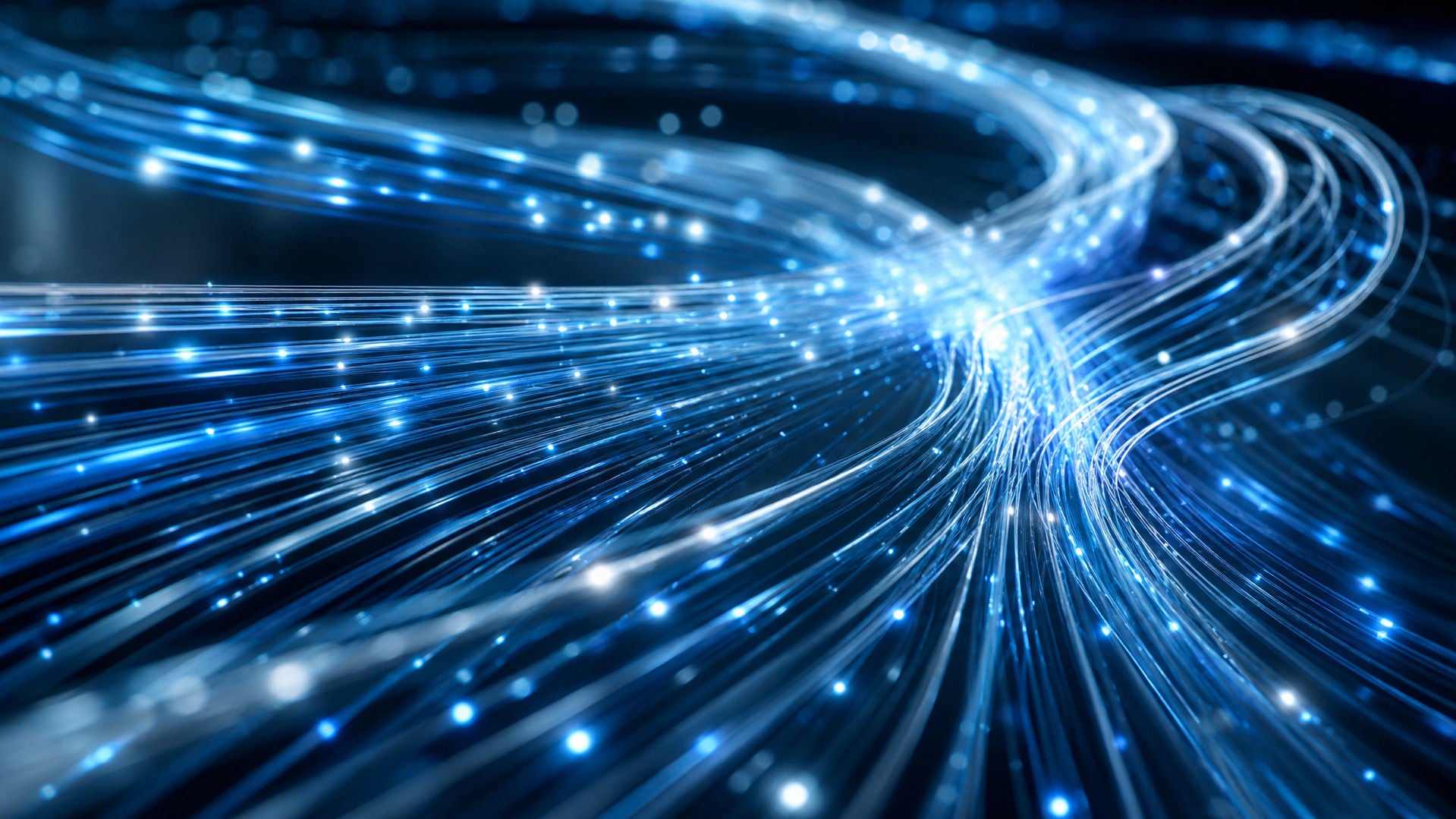
Fiber internet is the fastest type of Internet connection available, using thin glass strands to transmit data as pulses of light at speeds up to 8 Gbps. Because it carries light instead of electricity, fiber delivers symmetrical upload and download speeds, greater reliability, and stronger security than cable, copper, DSL, or 5G connections.
Fiber’s light-speed efficiency ensures symmetrical upload and download speeds, enhancing Internet, gaming and streaming experiences. Nothing is faster than the speed of light, and no connection is faster than Fiber.
But isn't glass highly breakable?
In data transmission applications, Fiber optic glass breakage is rare. These Fiber cables are over-engineered to handle demanding conditions and challenging installations. In fact, the military even uses Fiber cables to keep lines of communication open even in the roughest conditions.
How is fiber optic Internet installed?
Your Internet Service Provider (ISP) will send an expert to install a small utility box called an optical network terminal (ONT) outside or inside your home during the appointment. The technician connects an ONT to a nearby equipment box, which will carry the Fiber-optic connection from the broader network to your location. The terminal box is connected to your router through an Ethernet connection after it is connected to the network.
To take advantage of Fiber optic speeds, you'll need a Fiber-ready router. To ensure that all components of your service are compatible and will function with your new service, Optimum strongly advise getting a new Optimum gateway directly from us. Most providers let you rent or buy a router that will help you get the most out of your Fiber connection.
Fiber to the Home (FTTH) vs. Fiber to the Node (FTTN)
Optimum Fiber is Fiber to the home (FTTH), which means that the Fibers are installed into the home, connecting you directly to the fastest speeds available. Some providers install Fiber to the node (FTTN), which means that the Fiber source is installed and linked into a shared neighborhood port while copper cables connect this hub to your home. FTTN is slower and not as reliable as FTTH.
Is Fiber Internet better?
Fiber Internet can handle the increasing demand for more bandwidth, meaning the only future upgrade needed would be for the network equipment, not the actual Fiber cables. Fiber optic cables send data up to 1,000 times faster than copper cables.
Faster data speeds mean speedier upload and download speeds, shorter loading time on websites and streaming without lagging. Plus, since Fiber cables do not radiate a signal, it is tough to extract data from it, making it more secure.
Fiber can better withstand different temperatures, water and weather than other technologies. And since we build Fiber lines directly to your home, you don’t have to worry about spotty signals from a satellite or tower. Since the Fibers are made of glass, it transmits light instead of electricity.
Other technologies that deliver the Internet include cable, copper, and DSL. While these older options use shared lines where your speeds can suffer based on neighborhood traffic, Fiber networks offer vastly more bandwidth to completely eliminate these slowdowns. Fiber brings opportunity. Not just the chance for buffer-free streaming, but the opportunity for our homes and businesses to expand their communication.
What’s the difference between Wi-Fi and Fiber?
As we've covered before, Fiber optic Internet is a connection that uses fine glass cables to send data at fast speeds utilizing light pulses. The use of light and glass is an alternative to the wireless connection used for Wi-Fi.
Wireless connections no longer require the vast setup that Fiber does because fixed wireless or mobile data connections are delivered via cellular radio towers. Consequently, it is a connection that doesn't require a physical wire to utilize the Internet.
Wi-Fi provides a network for different devices to connect with the net wirelessly through radio waves. This network is established through Wi-Fi routers. Smartphones, laptops, computers or any other device to connect to a wireless network can utilize Wi-Fi.
| Feature | Fiber Optic Internet | Wi-Fi Connection |
|---|---|---|
| How Data Travels | Pulses of light through thin glass cables. | Wireless radio waves broadcast through the air. |
| Performance Under Congestion | Consistently maintains peak speeds, even when your neighborhood is online. | Slows down and gets crowded as more devices connect simultaneously. |
| Distance & Signal Strength | Delivers a perfectly clear, uncompromised signal over massive distances. | Signals naturally degrade and weaken the further you move from the router. |
| Connection Role | Brings the main, hyper-fast internet highway directly into your home. | Distributes that internet highway wirelessly to your phones, laptops, and smart devices. |
Fiber Internet and symmetrical Internet speeds
Fiber Internet’s consistent speed also translates to symmetrical upload and download Internet speeds, meaning that the user will experience little to no lag whether they need to receive or transmit data. Other broadband connections – including cable – have unequal upload and download speeds, leading to more potential lag (and frustration).
What is the fastest Fiber optic speed?
The fastest form of broadband Internet (high speed Internet) technology, Fiber Internet offers even faster speeds than satellite Internet, digital subscriber line (DSL) Internet and other forms of Internet connections. Optimum offers Fiber Internet access at speeds of up to 8 gigabit per second (Gbps).
Fiber optic Internet service from Fiber optic Internet providers offers much faster Internet speeds over much greater distances than traditional copper wired Internet networks like DSL and cable.
Depending on your ISP, you can expect to receive the best broadband Internet speeds available. Best of all, Fiber networks are designed for the future – even if speeds become 1000 times faster than the current rates, Fiber optics will be ready to transmit them.
What is the advantage of Fiber Internet?
Fiber Internet offers a long list of user benefits, including:
- Easily stream video and audio files: Whether you are streaming a movie on Netflix, listening to streaming audio on Radio Paradise or watching YouTube videos, Fiber Internet has plenty of bandwidth to make it happen
- Get a high-security Internet connection: Fiber optic cables offer a much more secure Internet connection than copper wire Internet connections which can be more easily compromised and lead to signal hacking
- Enjoy faster upload speeds and download speeds: With Fiber Internet, you can easily upload and download files at the same time. This includes Internet files, cable TV and even phone applications
- Be more competitive at online gaming: If you’re an online gamer, you may have experienced problems with “latency” when using the Internet – a delay between pressing your controller button and your on-screen character taking action. Fiber optic networks help to resolve this issue and make it feel like you are playing in “real time”
- Avoid signal interference: Fiber optic connections are virtually immune to signal interference that can be caused by radio and electromagnetic frequencies
- Dependable technology: Since Fiber Internet transfers data through light signals, there is less wear and tear on the cables. In addition, Copper cables are susceptible to fire and extreme weather conditions that can affect the data transmission and connectivity. DSL Internet also uses vibrational signals to send data which can begin to wear down copper cables over time
- Pay less, get more: Fiber Internet connections have become more affordable due to the large-scale production of Fiber optic cables from Fiber providers around the world
- Look to the future: Fiber optic technology continues to expand in all areas. You can trust that the high performance Internet service you are enjoying now will continue for years to come
Why Fiber Internet could be future proof
Many Internet experts are indicating that Fiber Internet may never become obsolete. In fact, they are predicting that Fiber is so future-proof that most people will have to update their electronics before upgrading the Fiber itself.
Says one Internet network architect:
“Another way to look at it is you’ve got a road to your house, and today you’ve got a gas car,” he said. “Tomorrow you might be driving a hybrid, and then after that you’ll be buying electric. It’s the same road. And with Fiber, you’re building a data highway. Over time, you’re going to upgrade what vehicles you run on that data highway, but you’re not going to update the Fiber.”
These experts also cite Fiber’s outstanding capacity as another reason why many are calling it “the final frontier of high speed Internet.”
In addition to offering high performance Internet speeds, Fiber cable is also environmentally friendly, making it sustainable for the future. Sending a flash of light across a Fiber optic cable takes significantly less energy than sending electrical signals through copper cables and coaxial cables. This means less carbon output, lower emissions and greener operations.
Finally,Fiber optic cables are used in hundreds of industries, including imaging optics for medical applications, digital signage, SONAR and many others. As these industries continue to progress, new Fiber optics developments are coming – and Internet providers will be watching. From all indications, Fiber Internet is not only a great choice for high speed Internet now – it’s an Internet technology that is designed and built for future online applications.
Optimum: Your link to Fiber Internet and other great options.
In this age of technology, you don’t want to miss out on all of the great information and entertainment options that are available to you.
If you are looking for reliable, high-performing Internet, look to Optimum. Find out if Optimum Fiber is available near you and explore Optimum Fiber Internet plans to keep your home connected.
Ready to switch to Optimum?
YOU MAY ALSO LIKE

Optimum vs. AT&T: Compare Internet speed, pricing and coverage
- Read Time: 8 min.
- Internet
- October 08, 2026
How Much Internet Speed Do You Need?
- Read Time: 8 min.
- Internet
- October 08, 2026
How to Find The Best Internet Service Providers (ISPs) In Your Area
- Read Time: 6 min..
- Internet
- October 08, 2026