


Data and Analytics Tips for Small Businesses
By: Vincent Totino
Read Time: 5 min.
May 05, 2023
If you have a small business, data analytics is worth mastering. Data can show you where you currently succeed and where there's room for improvement. It's an invaluable tool for growing your business and ensuring you deliver high-quality services to your customers. To help you to learn how to leverage data for your small business, we’ve pulled together a guide with some must-know tips.
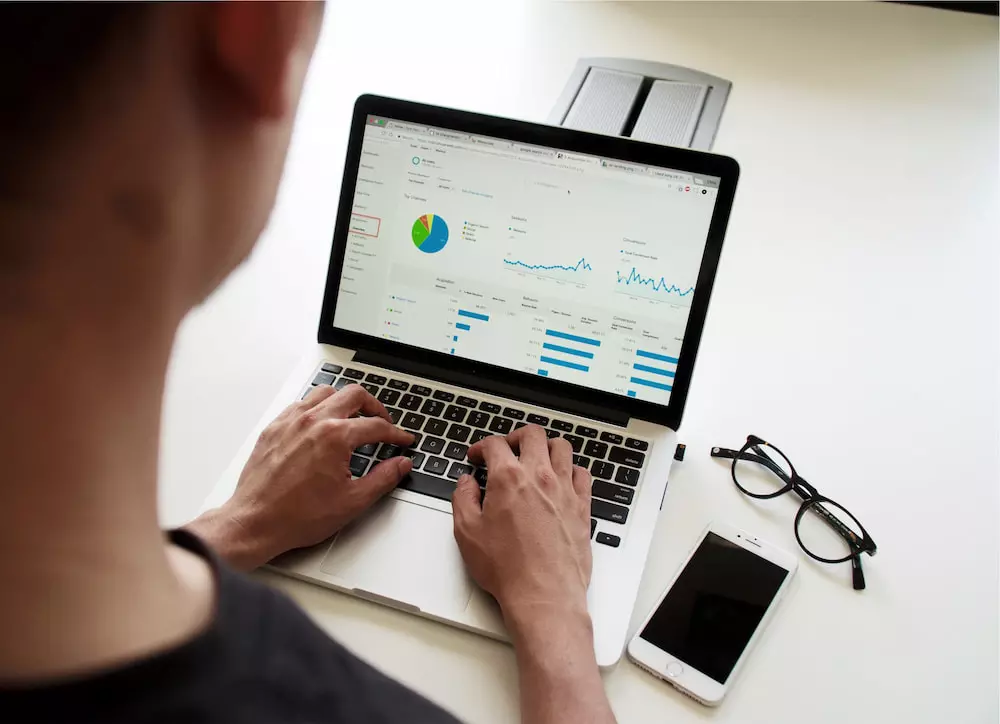
Benefits of Leveraging Data
First, let’s discuss the importance of leveraging data in a small business a little further. When we talk about data, we’re not just referring to the number of users on your website (although this is an important metric). Data can be any information you collect—from the number of likes on a social media post to an email someone used to register on a shared WiFi network. And when the objective is to make a business grow, the more data you collect, the better off you'll be. So, let’s take a look at some of the most notable benefits of leveraging data:
- Establishes a data-centric approach to your business: Using data to inform your decisions means you don’t need to guess what your customer wants in order to make good choices for your small business. Data analytics gives you the insights you need to work with your clients efficiently and effectively.
- Helps you understand your competition: The better you know your competitors, the easier it will be to create the best strategy for your small business. Data can help you to identify your competitors and always be updated on what they are selling and how they are doing it. With all this information in hand, you will be able to draw a panorama of the market's tendencies, analyze it properly, and boost your sales.
- Refines your customer experience: Communicating with your customers via adverts, websites, or communication channels (such as text messaging and email), should be one of your biggest priorities. Without your clients, your business doesn’t exist, so it’s really important to create a connection with them. Fortunately, tracking data can help you with that. Data shows you what your customers are engaging with—and what they're not. You can use this information to improve the digital customer experience, foster loyalty, and drive conversions.
How to Use Data and Analytics
Get in-store customer demographics
Your business’ WiFi network can be a helpful tool for collecting data. With Optimum Business PRO WiFi, depending on how you set up your guest WiFi sign up form, you can collect data (such as age, gender, and email addresses) when a guest logs onto your network. That data can then be used to learn more about your customers and their needs, enabling you to better tailor your services.
Optimize your inventory
You can use website analytics to check which of your products or services get the most visits and clicks. Based on this information, you can focus on the items that sell best and cut back on those with less interest. Some analytics and marketing tools for small businesses worth mentioning are Google Analytics and Adobe Analytics. They both provide good insights for different channels, such as website, video, social media, and mobile.
Add personalization to help retain customers
According to a 2022 Salesforce study, 56% of customers expect offers to always be personalized. That same study found that 88% of customers believe that the experience a company provides is as important as the products (or services) it offers. And if you’re not personalizing communications, you’re not providing the top-notch service your customers expect.
One easy way to offer personalization is using your clients’ names when addressing them—not only on social media but also on email marketing and form replies. Another way to help strengthen the customer experience is by sending personalized cards for important events, such as birthdays. You can also track your client's interest in specific products or services and send them personalized offers for those services.
Make your social media marketing more effective
Social media can also provide excellent insights for your small business. Data analytics extracted from platforms like Instagram and TikTok can help you to learn more about your customers and their desires. And the better you understand your customers, the better (and more effective) you can make your social media marketing strategy. Keep in mind, however, that each social media platform has its own rules, objectives, and functions. As such, your data analysis should be unique to each platform.
Identify UX issues
Never underestimate the power of the user experience (UX). Having a visually-appealing website is important but so is functionality—incredibly so. For the user experience to be positive, your website should be fast and intuitive, and give your customers what they’re looking for. Data can help with this as you can use it to detect UX problems. For example, if your analytics tools show that users don’t stay long on your website, it could indicate loading problems, broken links, or an overall poorly-designed site. You can also use data to see whether desktop and mobile users interact with your site in different ways. So, study the data you extract, learn from it, and leverage that information to make your website better.
Develop new features and products
Finally, don’t forget that feedback is also a very valuable piece of data. Accurate feedback can help you improve your service or product and give you a better understanding of your customers’ needs. It might even help you develop your next great product or service.
Following these business tips can help you make the most of the valuable resource that is your company’s data. For more ways to help your small business thrive, read our guide to digital marketing strategies.
YOU MAY ALSO LIKE
Lubbock Small Business Grants: How 25 Local Businesses Can Win $5,000 Each
- Read Time: 4 minutes
- Products
- October 15, 2026

E-Line vs E-LAN vs V-LINE and Dark Fiber vs Wave Services
- Read Time: 8 min.
- Business Tips
- October 15, 2026

Long Island Small Business Grant Winners 2026
- Read Time: 4 min.
- Products
- October 15, 2026